


Hey there! As a supplier of kerosene gas pumps, I often get asked about the maximum pumping height of these pumps. It's a crucial question, especially for those in the fuel - handling industry. So, let's dive right into it.
First off, what exactly is the maximum pumping height? Well, it refers to the vertical distance that a kerosene gas pump can lift the kerosene from the storage tank to the point of dispensing. This is affected by a bunch of factors, like the pump's design, the power source it uses, and the properties of the kerosene itself.
Factors Affecting the Maximum Pumping Height
Pump Design
The design of the kerosene gas pump plays a huge role. There are different types of pumps, such as centrifugal pumps and positive displacement pumps. Centrifugal pumps work by using an impeller to spin the kerosene and create a flow. They're great for high - flow applications but may have limitations when it comes to pumping height. Positive displacement pumps, on the other hand, trap a fixed amount of kerosene and then force it out. These pumps can generally achieve a higher pumping height compared to centrifugal pumps.
For example, a well - designed positive displacement kerosene gas pump can lift the fuel to a relatively high level because it directly moves the fluid in a more controlled manner. If you're interested in different pump designs, you might want to check out Petrol Gasoline Pump. It gives a good overview of various pump types and how they work.
Power Source
The power source of the pump is another key factor. Electric - powered pumps usually have more consistent power output compared to manual or engine - powered pumps. An electric pump can maintain a steady flow and pressure, which is essential for reaching a greater pumping height. Engine - powered pumps, while they can be powerful, may fluctuate in performance depending on factors like the engine's condition and the fuel it uses.
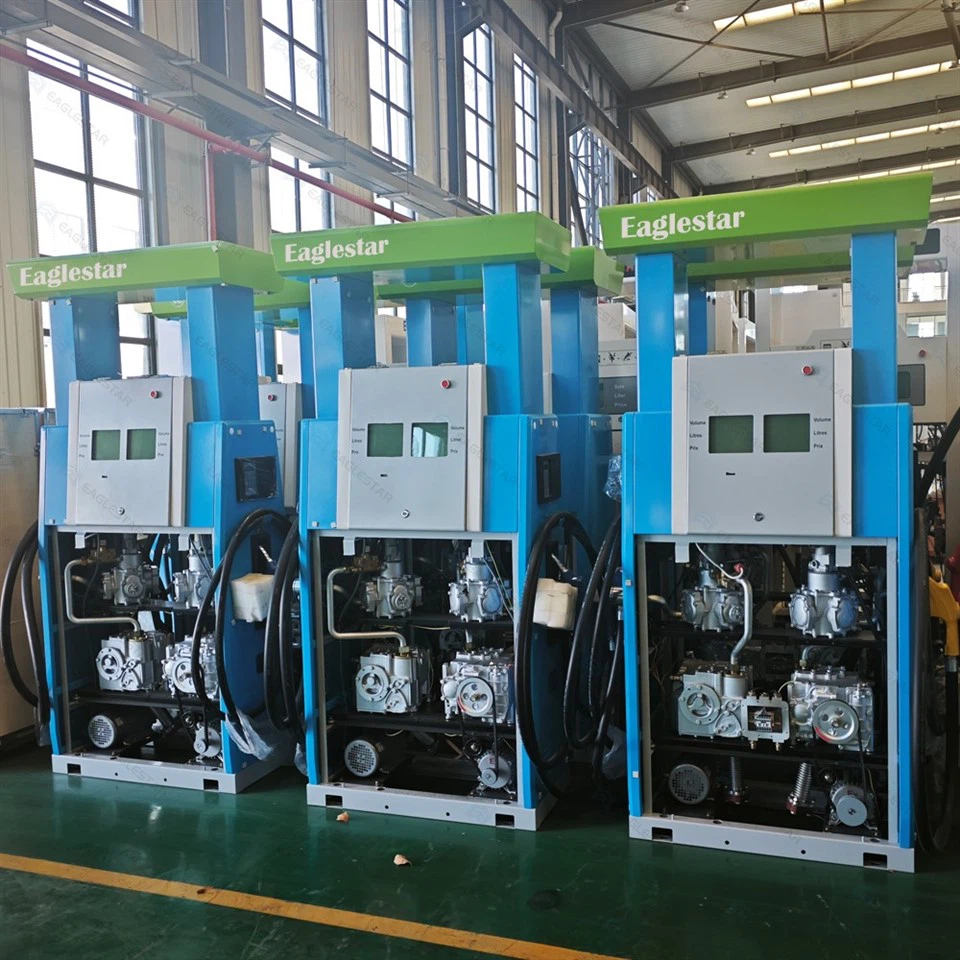

If the pump has a low - power engine or a weak electric motor, it won't be able to generate enough pressure to lift the kerosene to a high point. When looking for a powerful pump, you can explore Petrol Pump Machine Fuel Dispenser, which showcases some high - performance fuel dispensers with different power options.
Kerosene Properties
The properties of kerosene also matter. Kerosene has a certain density and viscosity. Higher - density kerosene requires more energy to lift, which can reduce the maximum pumping height. Viscosity, which is a measure of how thick the kerosene is, also affects the flow. If the kerosene is too viscous, it will flow more slowly and may not be able to reach a high pumping height.
Typical Maximum Pumping Heights
In general, a standard kerosene gas pump can usually achieve a pumping height of around 3 - 6 meters. However, high - performance pumps specifically designed for greater heights can lift the kerosene up to 10 meters or more. But keep in mind, these are just rough estimates. The actual pumping height can vary widely based on the factors we discussed earlier.
For applications where you need to pump kerosene to a great height, like in large industrial settings or for some aviation fueling operations, you'll want a pump with a high maximum pumping height. You might find Fuel Dispenser With Dual Nozzles useful in such cases, as it can provide a more efficient way to handle the fuel transfer.
Considerations for Different Applications
When choosing a kerosene gas pump based on its maximum pumping height, you also need to consider the specific application. For small - scale applications, like a local gas station or a small workshop, a pump with a 3 - 6 - meter pumping height may be sufficient. On the other hand, large - scale operations, such as oil refineries or airports, demand pumps that can go much higher.
In addition to the pumping height, you should also look at factors like the flow rate of the pump. A high - flow pump can transfer a large volume of kerosene in a short time, which is important for high - demand applications.
Importance of Choosing the Right Pump
Picking the right kerosene gas pump with an appropriate maximum pumping height is super important. If you choose a pump with a pumping height that's too low for your needs, you won't be able to get the kerosene to where it needs to go. This can lead to inefficiencies, delays, and even safety issues in some cases.
On the flip side, if you choose a pump with a much higher pumping height than you actually need, you'll end up spending more money on the pump and may also waste energy during its operation.
Conclusion
So, in conclusion, the maximum pumping height of a kerosene gas pump can vary significantly depending on the pump design, power source, and the properties of the kerosene. Standard pumps usually offer a pumping height of 3 - 6 meters, but high - performance ones can reach up to 10 meters or more.
When you're in the market for a kerosene gas pump, make sure to carefully assess your needs, including the required pumping height and flow rate. This way, you can choose the perfect pump for your application.
If you're interested in partnering with us or have any questions regarding our kerosene gas pumps, feel free to get in touch for procurement discussions. We're here to help you find the best solution for your fuel - handling needs.
References
- Engineering textbooks on fluid mechanics and pump design
- Industry reports on fuel handling equipment performance