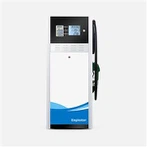
To gain a deeper understanding of fuel dispenser accessories, it is essential to familiarize ourselves with the various components that make up these systems and the functions they perform.
Fuel Dispenser Accessories and Hydraulic System
Fuel dispensers are equipped with a hydraulic system that is pivotal for their operation. This system ensures the efficient transfer of fuel from the storage tank to the dispensing nozzle.
Oil Pump
The oil pump serves a critical role in the fuel dispensing process. Activated by an explosion-proof motor, it is responsible for drawing fuel from the storage tank and delivering it into the dispenser. This step is crucial for ensuring a smooth and safe flow of fuel.
Oil and Gas Separator
The oil and gas separator is a vital component of the fuel dispenser's accessory lineup. It effectively separates oil from gas before the fuel enters the high-pressure chamber and flows into the flowmeter. This separation is essential for maintaining the integrity and accuracy of the dispensing process.
Flowmeter
Typically, fuel dispensers utilize volumetric flowmeters designed to measure the volume of fuel passing through the system. As a specific volume of oil flows, it displaces a transmission shaft, which triggers a sensor to emit corresponding pulses. These measurements are critical for ensuring accurate fueling transactions.
Solenoid Valve
The solenoid valve is integral for precision in fuel dispensing. It addresses the issue of overshooting during the quantitative refueling process, thereby enhancing accuracy. Additionally, in submersible pump systems, this valve plays a crucial role in shutting off the oil pipeline when fuel is not being dispensed, contributing to safety and efficiency.
Self-Sealing Fuel Nozzle
This component is designed to facilitate the safe filling of fuel. The self-sealing mechanism ensures that when the container reaches its capacity, the oil gun automatically shuts off, acting as an anti-overflow device to prevent spills.
Additional Components
Beyond these primary accessories, fuel dispensers also include essential elements such as racks, computer monitors, encoders, oil pipes, keyboards, and oil pump motors. These components work together to facilitate the seamless operation of fuel dispensing systems, ultimately supporting efficiency and user-friendly experiences within the fuel dispensing industry.
By understanding these key components and their functions, stakeholders in the fuel dispensing sector can appreciate the complexity and importance of each part in contributing to a safe and efficient fueling environment.