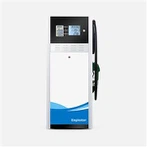
The fuel dispenser is a common type of equipment in life. When using the tanker, we will inevitably encounter some tanker failures. So what are the common tanker failures? How should we check and solve the fault? Let's learn about it with the tanker manufacturer:
When the solenoid valve of the fuel dispenser cannot be opened and the machine does not produce oil, first check the control circuit part of the solenoid valve, such as whether the lamp valve board, relay board or main board is damaged, and whether the zero line is connected well, and then check the solenoid valve. Its own faults, such as whether the coil in the valve is open circuit, whether the valve membrane hole is blocked, etc.
When the oil pipeline leaks, when the amount of gas entering the oil pipeline exceeds the maximum amount of gas separated by the oil and gas separator, gas in the oil will also be formed. The damage of the motor, the open circuit of the internal coil of the three-phase motor and the damage of the starting capacitor of the single-phase motor will reduce the load capacity of the motor, and the motor will rotate slowly and generate heat when the fuel dispenser is turned on; the circuit board that controls the motor will also be damaged. The motor is difficult to start, such as the three-phase thyristor board is disconnected all the way or the conduction capacity of the photosensitive thyristor is low.
Due to impurities entering between the copper sleeve and the piston of the flowmeter, or because of the wear of the internal transmission mechanism (such as bakelite wheel, connecting rod, etc.), the four pistons cannot move, so that the oil machine cannot discharge oil. Calculate, remove the sundries in the copper sleeve, and replace the worn parts; the oil outlet valve of the oil and gas separator is stuck and cannot be opened, resulting in no oil from the oil dispenser. When repairing, the oil outlet valve should be removed, and then reinstalled after removing the sundries, so that it can move up and down freely; check the exhaust status of the exhaust pipe of the oil and gas separator under the power-on state, if the exhaust does not stop, you can start to judge It is a leaking fault in the pipeline of the tanker or the bottom valve.