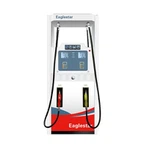
(1) The fuel dispenser is equipped with a leakage detection riser to meet the online detection requirements and ensure that leakage at any part of the inner and outer walls of the oil tank can be discovered.
(2) The manhole of the buried oil tank should be equipped with an operating well. The well should be cleaned regularly and there should be no debris, water accumulation or oil leakage. Good electrostatic grounding and bridging. Manholes located under the roadway should use sealed manhole covers and well seats specially designed for gas stations under the roadway.
(3) Oil tanks should take measures to prevent overflow when unloading oil. When the oil reaches 90% of the tank capacity, the high liquid level alarm device should be triggered; when the oil reaches 95% of the relevant capacity, it should be able to automatically stop the oil from continuing to enter the tank.
(4) The fuel dispenser should be equipped with a liquid level detection system with a high liquid level alarm function. The system should be located in a location within earshot or sight of on-site operators and in a staffed room.
(5) Each fuel dispenser should be equipped with its own oil discharge interface for the oil discharge pipeline. Each oil unloading interface and oil
and gas recovery interface should be clearly marked.
(6) A shear valve should be installed on the oil supply pipeline at the bottom of the tanker. When the tanker is hit or catches fire, the shear valve should be able to close automatically.
(7) An anti-collision post (rail) should be installed near the tanker at the end of the refueling island, and its height should not be less than 0.5m.
(8) Whether the bottom of the tanker is filled with fine sand, and whether the corrugated flange pipe and submersible pump pull-off valve are exposed outside the sand.